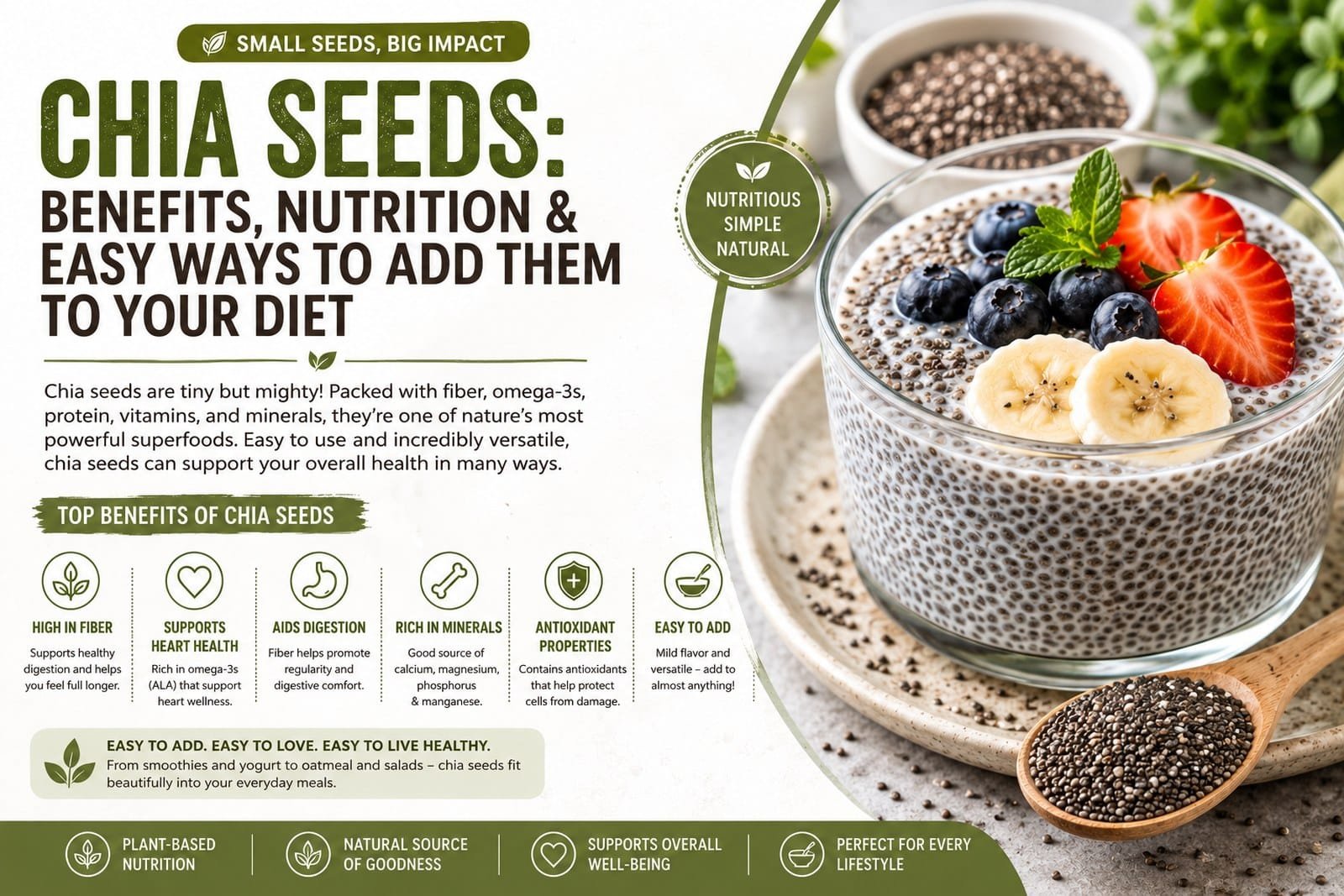
Chia seeds have become increasingly popular among people looking for simple, nutritious foods to add to their daily diet. These tiny black and white seeds may be small in size, but they contain a variety of important nutrients, including fiber, plant-based omega-3 fatty acids, protein, minerals, and antioxidants.
Whether you add them to smoothies, yogurt, oatmeal, or simply soak them in water, chia seeds can be an easy addition to a balanced diet.
What Are Chia Seeds?
Chia seeds come from the Salvia hispanica plant, which is native to parts of Mexico and Central America. They have been consumed for centuries and are valued for their nutritional content.
One of their most interesting characteristics is their ability to absorb liquid and form a gel-like texture. This makes them useful in drinks, puddings, and many healthy recipes.
Nutritional Benefits of Chia Seeds
Chia seeds provide several nutrients that can support overall health. They are particularly well known for being a good source of dietary fiber and plant-based omega-3 fatty acids.
They also contain:
- Dietary fiber
- Plant-based protein
- Omega-3 fatty acids (ALA)
- Calcium
- Magnesium
- Phosphorus
- Manganese
- Antioxidants
Because of this nutritional profile, chia seeds can be a useful addition to a varied and balanced diet.
7 Potential Benefits of Chia Seeds
1. High in Dietary Fiber
Chia seeds are naturally rich in fiber. Fiber is important for normal digestive function and can help you feel fuller after meals.
Adding chia seeds to foods such as oatmeal, yogurt, or smoothies can be a convenient way to increase your daily fiber intake.
2. Provides Plant-Based Omega-3s
Chia seeds are one of the better plant sources of alpha-linolenic acid (ALA), a type of omega-3 fatty acid.
Omega-3 fats are important nutrients that play a role in maintaining normal heart and overall health.
3. Supports Digestive Health
The fiber in chia seeds can support regular bowel movements and healthy digestion. When chia seeds are mixed with liquid, they absorb water and develop a gel-like consistency.
For this reason, it is important to consume chia seeds with enough fluids, particularly if you are increasing your fiber intake.
4. May Help You Feel Full
Because chia seeds contain fiber, protein, and healthy fats, they can contribute to feelings of fullness.
Adding a small amount to breakfast or a snack may help make a meal more satisfying.
5. Contains Important Minerals
Chia seeds provide minerals such as calcium, magnesium, phosphorus, and manganese.
These nutrients contribute to several normal functions in the body, including maintaining healthy bones, muscles, and energy metabolism.
6. Contains Antioxidants
Chia seeds contain antioxidant compounds that help protect their fats from oxidation. Antioxidants are also part of a healthy diet that includes a variety of fruits, vegetables, whole grains, nuts, and seeds.
7. Easy to Add to Everyday Meals
One of the biggest advantages of chia seeds is how easy they are to use. Their mild flavor means they can be added to many different foods without significantly changing the taste.
How to Eat Chia Seeds
There are many simple ways to include chia seeds in your diet.
Try adding them to:
- Smoothies
- Yogurt
- Oatmeal
- Cereal
- Fruit bowls
- Homemade energy bites
- Chia pudding
- Salads
- Homemade baked goods
Simple Chia Seed Drink
For a simple chia drink, mix 1 tablespoon of chia seeds into a glass of water. Let the seeds soak for around 10–15 minutes, stirring occasionally, until they develop a gel-like texture.
You can add lemon or fresh fruit for extra flavor.
Chia Seeds for Breakfast
Chia seeds can make a nutritious breakfast more filling. You can sprinkle them over oatmeal or yogurt, blend them into a smoothie, or prepare chia pudding the night before.
Easy Chia Pudding Recipe
Ingredients:
- 2 tablespoons chia seeds
- ½ cup milk or a milk alternative
- ½ teaspoon honey or another sweetener
- Fresh fruit of your choice
Method:
- Mix the chia seeds and milk in a container.
- Add honey or your preferred sweetener.
- Stir well.
- Refrigerate for at least 2–3 hours or overnight.
- Top with fresh fruit and enjoy.
How Much Chia Seed Should You Eat?
There is no single amount that everyone needs. A common serving is around 1–2 tablespoons per day.
If you are not used to eating much fiber, start with a smaller amount and gradually increase it while drinking enough water.
It is also best to eat chia seeds as part of a balanced diet rather than relying on them as a single “superfood.”
Things to Keep in Mind
Although chia seeds are nutritious, more is not always better. Eating large amounts at once can cause digestive discomfort, particularly if your body is not accustomed to a high-fiber diet.
Because dry chia seeds absorb liquid and expand, avoid swallowing large amounts of dry seeds by themselves. Soaking them or mixing them thoroughly into moist foods is a sensible approach.
If you have difficulty swallowing or have been advised to restrict certain nutrients, speak with a healthcare professional before making significant dietary changes.
Final Thoughts
Chia seeds are small, versatile, and packed with useful nutrients. Their fiber, plant-based omega-3 fats, protein, minerals, and antioxidants make them a convenient addition to a balanced diet.
From chia pudding and smoothies to yogurt and oatmeal, there are plenty of easy ways to enjoy them every day.
The key is consistency and balance: rather than looking for one food to provide all the benefits, combine chia seeds with a variety of nutritious foods for a well-rounded diet.
Frequently Asked Questions
Can I eat chia seeds every day?
Yes, chia seeds can be included in a healthy diet every day. Start with a small amount if you are not accustomed to high-fiber foods and make sure you drink enough fluids.
Should chia seeds be soaked before eating?
They don’t always need to be soaked, but soaking them or mixing them into moist foods can make them easier to consume and helps prevent swallowing dry seeds by themselves.
Are chia seeds good for digestion?
Chia seeds are high in dietary fiber, which can support normal digestion and regular bowel movements.
Can I add chia seeds to water?
Yes. Chia seeds can be mixed with water and allowed to soak until they form a gel-like texture. You can add lemon or fruit for flavor.
What is the best time to eat chia seeds?
There is no specific best time. You can enjoy them at breakfast, as part of a snack, or with other meals depending on your preference.
Chia seeds have become increasingly popular among people looking for simple, nutritious foods to add to their daily diet. These tiny black and white seeds may be small in size, but they contain a variety of important nutrients, including fiber, plant-based omega-3 fatty acids, protein, minerals, and antioxidants.
Whether you add them to smoothies, yogurt, oatmeal, or simply soak them in water, chia seeds can be an easy addition to a balanced diet.
What Are Chia Seeds?
Chia seeds come from the Salvia hispanica plant, which is native to parts of Mexico and Central America. They have been consumed for centuries and are valued for their nutritional content.
One of their most interesting characteristics is their ability to absorb liquid and form a gel-like texture. This makes them useful in drinks, puddings, and many healthy recipes.
Nutritional Benefits of Chia Seeds
Chia seeds provide several nutrients that can support overall health. They are particularly well known for being a good source of dietary fiber and plant-based omega-3 fatty acids.
They also contain:
- Dietary fiber
- Plant-based protein
- Omega-3 fatty acids (ALA)
- Calcium
- Magnesium
- Phosphorus
- Manganese
- Antioxidants
Because of this nutritional profile, chia seeds can be a useful addition to a varied and balanced diet.
7 Potential Benefits of Chia Seeds
1. High in Dietary Fiber
Chia seeds are naturally rich in fiber. Fiber is important for normal digestive function and can help you feel fuller after meals.
Adding chia seeds to foods such as oatmeal, yogurt, or smoothies can be a convenient way to increase your daily fiber intake.
2. Provides Plant-Based Omega-3s
Chia seeds are one of the better plant sources of alpha-linolenic acid (ALA), a type of omega-3 fatty acid.
Omega-3 fats are important nutrients that play a role in maintaining normal heart and overall health.
3. Supports Digestive Health
The fiber in chia seeds can support regular bowel movements and healthy digestion. When chia seeds are mixed with liquid, they absorb water and develop a gel-like consistency.
For this reason, it is important to consume chia seeds with enough fluids, particularly if you are increasing your fiber intake.
4. May Help You Feel Full
Because chia seeds contain fiber, protein, and healthy fats, they can contribute to feelings of fullness.
Adding a small amount to breakfast or a snack may help make a meal more satisfying.
5. Contains Important Minerals
Chia seeds provide minerals such as calcium, magnesium, phosphorus, and manganese.
These nutrients contribute to several normal functions in the body, including maintaining healthy bones, muscles, and energy metabolism.
6. Contains Antioxidants
Chia seeds contain antioxidant compounds that help protect their fats from oxidation. Antioxidants are also part of a healthy diet that includes a variety of fruits, vegetables, whole grains, nuts, and seeds.
7. Easy to Add to Everyday Meals
One of the biggest advantages of chia seeds is how easy they are to use. Their mild flavor means they can be added to many different foods without significantly changing the taste.
How to Eat Chia Seeds
There are many simple ways to include chia seeds in your diet.
Try adding them to:
- Smoothies
- Yogurt
- Oatmeal
- Cereal
- Fruit bowls
- Homemade energy bites
- Chia pudding
- Salads
- Homemade baked goods
Simple Chia Seed Drink
For a simple chia drink, mix 1 tablespoon of chia seeds into a glass of water. Let the seeds soak for around 10–15 minutes, stirring occasionally, until they develop a gel-like texture.
You can add lemon or fresh fruit for extra flavor.
Chia Seeds for Breakfast
Chia seeds can make a nutritious breakfast more filling. You can sprinkle them over oatmeal or yogurt, blend them into a smoothie, or prepare chia pudding the night before.
Easy Chia Pudding Recipe
Ingredients:
- 2 tablespoons chia seeds
- ½ cup milk or a milk alternative
- ½ teaspoon honey or another sweetener
- Fresh fruit of your choice
Method:
- Mix the chia seeds and milk in a container.
- Add honey or your preferred sweetener.
- Stir well.
- Refrigerate for at least 2–3 hours or overnight.
- Top with fresh fruit and enjoy.
How Much Chia Seed Should You Eat?
There is no single amount that everyone needs. A common serving is around 1–2 tablespoons per day.
If you are not used to eating much fiber, start with a smaller amount and gradually increase it while drinking enough water.
It is also best to eat chia seeds as part of a balanced diet rather than relying on them as a single “superfood.”
Things to Keep in Mind
Although chia seeds are nutritious, more is not always better. Eating large amounts at once can cause digestive discomfort, particularly if your body is not accustomed to a high-fiber diet.
Because dry chia seeds absorb liquid and expand, avoid swallowing large amounts of dry seeds by themselves. Soaking them or mixing them thoroughly into moist foods is a sensible approach.
If you have difficulty swallowing or have been advised to restrict certain nutrients, speak with a healthcare professional before making significant dietary changes.
Final Thoughts
Chia seeds are small, versatile, and packed with useful nutrients. Their fiber, plant-based omega-3 fats, protein, minerals, and antioxidants make them a convenient addition to a balanced diet.
From chia pudding and smoothies to yogurt and oatmeal, there are plenty of easy ways to enjoy them every day.
The key is consistency and balance: rather than looking for one food to provide all the benefits, combine chia seeds with a variety of nutritious foods for a well-rounded diet.
Frequently Asked Questions
Can I eat chia seeds every day?
Yes, chia seeds can be included in a healthy diet every day. Start with a small amount if you are not accustomed to high-fiber foods and make sure you drink enough fluids.
Should chia seeds be soaked before eating?
They don’t always need to be soaked, but soaking them or mixing them into moist foods can make them easier to consume and helps prevent swallowing dry seeds by themselves.
Are chia seeds good for digestion?
Chia seeds are high in dietary fiber, which can support normal digestion and regular bowel movements.
Can I add chia seeds to water?
Yes. Chia seeds can be mixed with water and allowed to soak until they form a gel-like texture. You can add lemon or fruit for flavor.
What is the best time to eat chia seeds?
There is no specific best time. You can enjoy them at breakfast, as part of a snack, or with other meals depending on your preference.